Action - What can I do?
PROTEST, PROTEST, PROTEST - whenever, wherever there is an opportunity and in any way that you are able!
Make your views known by writing/emailing the developers, planning authorities, councillors and politicians.
If you get the chance to speak to anyone like that in person, do so and don't hold back.
Attend any relevant meetings or protests and share your views.
When there are public consultations for a project, either on-line or with face-to-face events, provide strong feedback and tell them what you think.
Put up posters and signs.
You might find support, encouragement and ideas by joining local campaign groups. There are many and contact details can found on our Other Voices page.
Possibly the most important thing is to keep informed about what is happening with the proposals and understand the real implications. This is harder than it sounds because things change frequently and solid, comprehensive, truthful information from developers and government bodies is often hard to get. There is an issue of transparency around much of the information.
Bear in mind that the pylon transmission lines go hand-in-hand with the development of the 'energy park' wind farms that they are intended to connect. The best chance of stopping a pylon project is by stopping the associated wind farms, a case of "cutting the head off the snake" (no offence to snakes intended). Equally, proposed wind farms cannot go ahead without a viable grid connection. They are inseparable parts of the same thing, although treated separately by developers and planning authorities. Your support of campaigns to stop wind turbines, even though not local to you, is the most effective way to prevent pylons near your home. By the same logic, if you are faced with the prospect of nearby wind turbines then help to stop the grid connection they depend on.
Have no illusions, this is a difficult fight. The motivation behind the opposition to pylon transmission lines is easily misunderstood. Apathy is a serious problem as many people either don't know about the developments or just don't care. For those who are at least aware, the effect of "greenwashing" on public opinion is very powerful indeed. Companies are experts at managing the media to send convincing messages to their advantage. Politicians are similarly fond of spinning simplistic slogans such as "Net Zero". Probably the majority of people in the UK, including the more densely populated parts of Wales are, arguably, quite happy to see rural and wild places sacrificed if it means their lifestyle is unaffected or improved. You need to demonstrate that our valleys and hills are important.
Writing
When writing letters or emails try to make them personal, with your own thoughts, in your own words. Make each point clear and unambiguous. Send messages to developers, government ministers and councillors and don't forget the press.
Responses directed to the planning authorities must keep to relevant topics and factual statements. Planning decisions are not based on opinions but only material considerations. So saying that you think your house will be worth less or a pylon will spoil your view will have no effect, whereas making the point that degradation of the landscape has a negative impact on tourism and the local economy will carry more weight.
There are a number of very good and detailed guides about writing planning objection letters. One example is Our Tywi Valley's Letter and Email Writing Help web page. Others can be easily found with a bit of searching and although some may be specific to a local area, they can be good inspiration wherever you are.
If you are given pre-prepared questionnaires, be very cautious about using them because they are often designed to give distorted results. Better to make feedback in your own way.
By all means post your thoughts on social media. It's a powerful thing these days, but also a two-edged sword and results can be unpredictable.
Banners
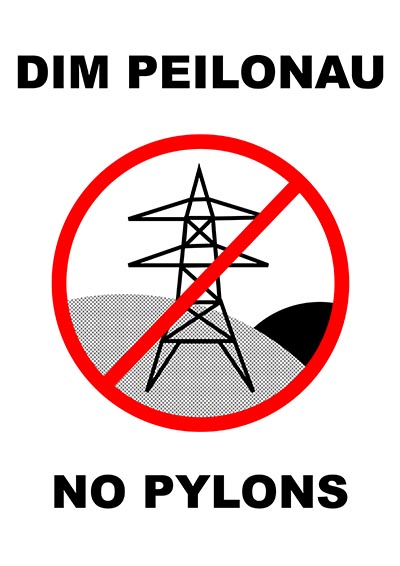
Displaying banners or posters is a great idea, especially if you live in an affected location that is clearly visible by passing public. There are several sources of ready made banners that can purchased or sometimes available free or with a donation. Contact your local campaign groups for help and there are several websites with information or downloadable files. You can print a simple poster from the PDF download on this page.
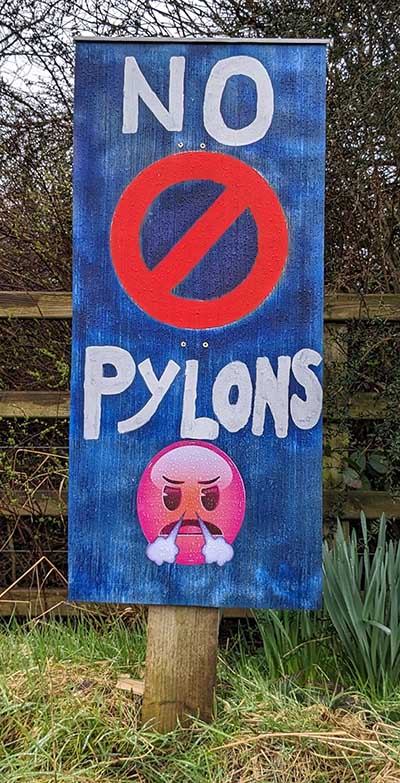
For a more personal touch, why not design and paint your own banner? Use your imagination, a home-made look is absolutely fine. No need for anything expensive, perhaps you have some materials and old paints that can be repurposed for free.
In Person
When the subject crops up, discuss the issues with family, neighbours or even strangers that you might meet in some day-to-day situation. Person to person conversation is one of the best ways to spread the word and raise awareness.
Occasionally there will be opportunities to speak to decision makers or developers. Try to attend public meetings and consultation events. Tell them what you feel, don't be fobbed of by stock answers and evasive excuses.
Consultation events and similar are also good chance for some real protesting. Put up some banners, wave placards, hand out information leaflets.
Get together with your local campaign groups, think of creative ways to attract attention to your cause.
Wales has a long history of strong protest, from the revolt led by Owain Glyndŵr to the Rebecca Riots, coal miner strikes, Capel Celyn march, Cymdeithas yr laith and the list goes on. The rampant industrialisation of rural Wales by mostly non-Welsh commercial predators is potentially greater exploitation of the land and injustice to its people. Don't stand by and allow greed and false promises to savagely destroy our green and beautiful land. Make your own voice heard by any means possible.
Here is a protest song and call-to-action from the Powys band Marshal and the Hats, together with Ian Jones of Builth Wells:
Visit their YouTube channel here - www.youtube/@marshalandthehats or click 'Watch' above.
click to download a high quality, printable PDF
Home made banner (image courtesy of Caru Teifi)